

STRAIGHTFORWARD
Standard Tree Removal
Removal of dead, declining, or unwanted trees where access is good and there’s enough open space to work efficiently.
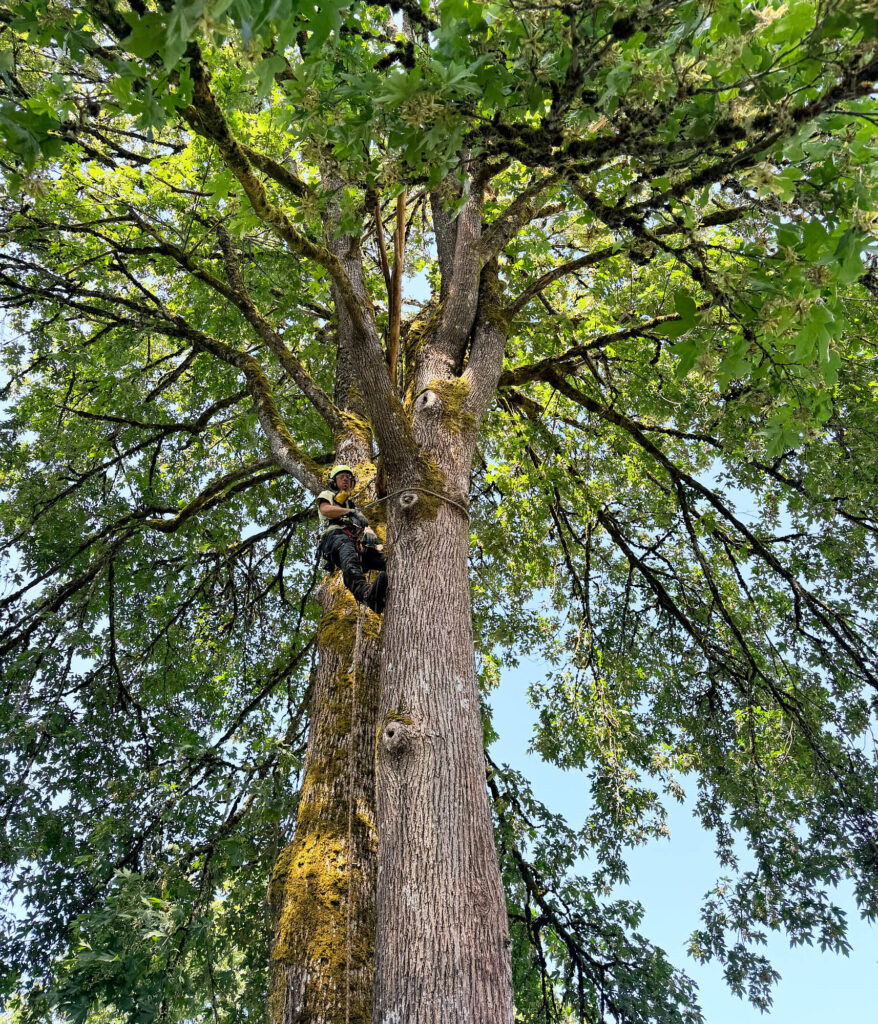
A bigleaf maple with decay at the base. A cedar in decline. A fir that shifted in last winter’s windstorm. When a tree is dead, hazardous, or no longer right for the property, we remove it with a clear plan for the tree, the yard, and everything around it.
Request a Free Estimate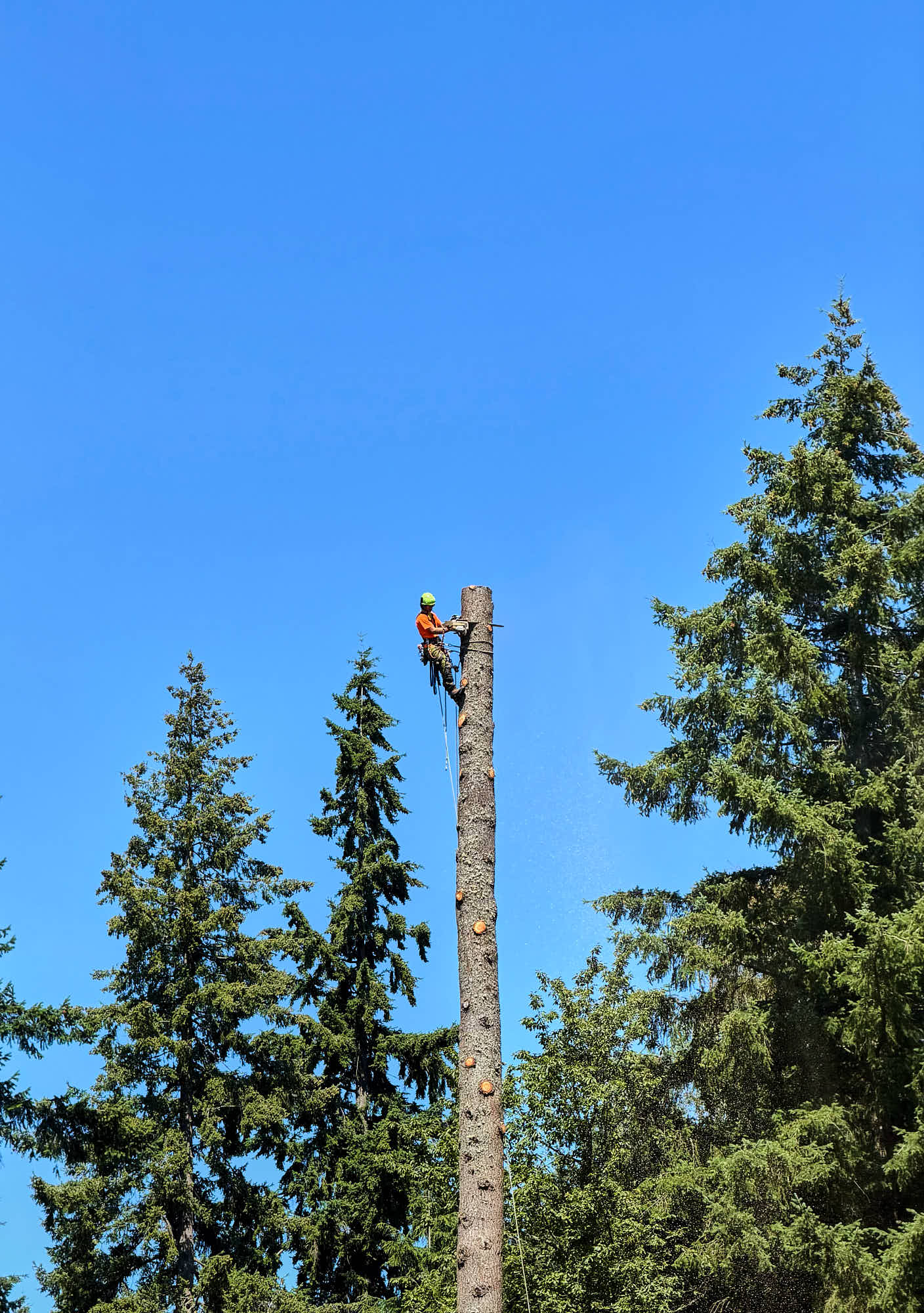
WHEN REMOVAL MAKES SENSE
We don’t recommend removal casually. We look at the tree, the property, and the available options first. When disease, structural problems, storm damage, or location make removal the right solution, we’ll tell you why.
"Every tree is different. The right answer should be too."
Every removal is planned around the tree, the property, and what’s around it. A wide-open Eastside lot calls for a very different approach than a narrow Seattle yard with a house, fence, and neighboring property a few feet away.
STRAIGHTFORWARD
Removal of dead, declining, or unwanted trees where access is good and there’s enough open space to work efficiently.
HAZARD
Trees with significant decay, storm damage, severe lean, compromised roots, or other structural concerns that require extra planning and care.
TIGHT ACCESS
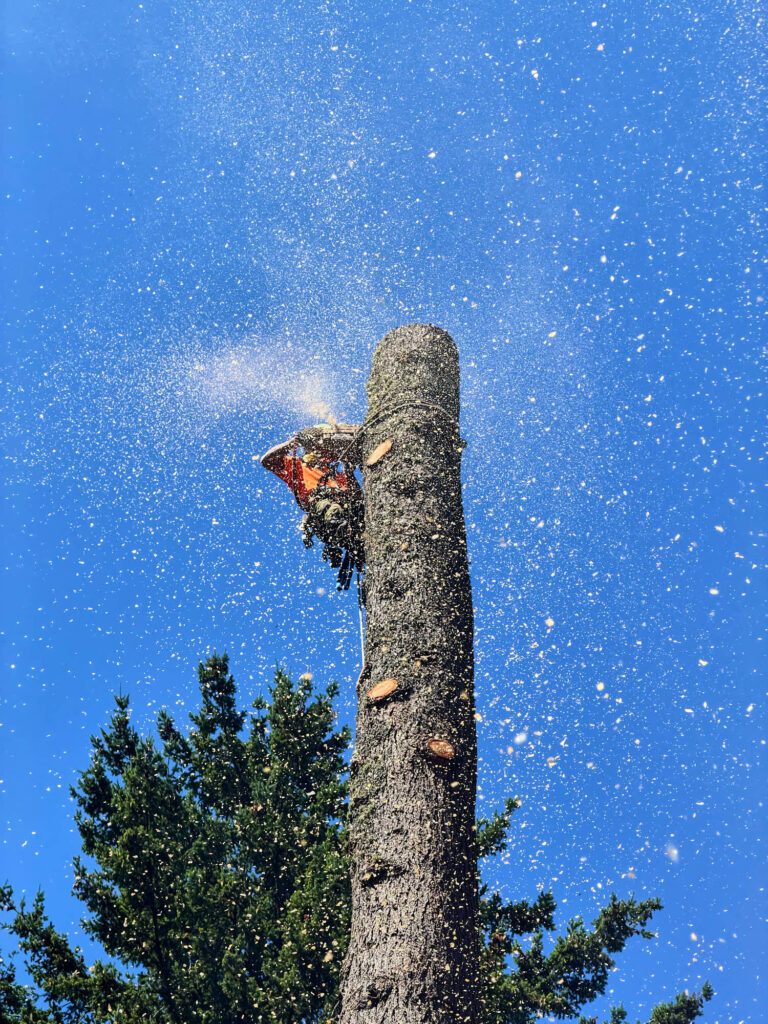
Piece-by-piece dismantling for trees between structures, over fences, or in yards too tight for a conventional drop.
CRANE ACCESS
For large trees or restricted-access sites where lifting sections out can be safer and more efficient than lowering them by rope.
NEAR STRUCTURES
Careful, section-by-section removal for trees close to roofs, garages, sheds, fences, and other areas where every cut has to account for what’s below.
SITE PREP
Remove specific trees for additions, driveways, building pads, or landscape changes without unnecessarily clearing the rest of the property.
"Every removal starts with a plan for what’s underneath: the lawn, the fence, the neighbor’s roof."
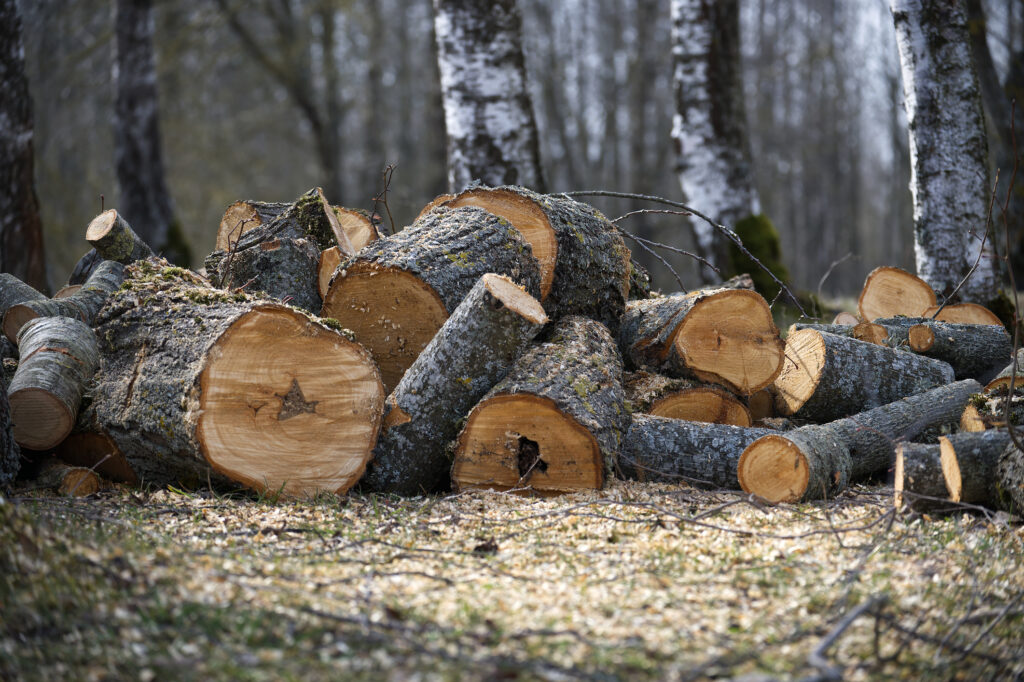
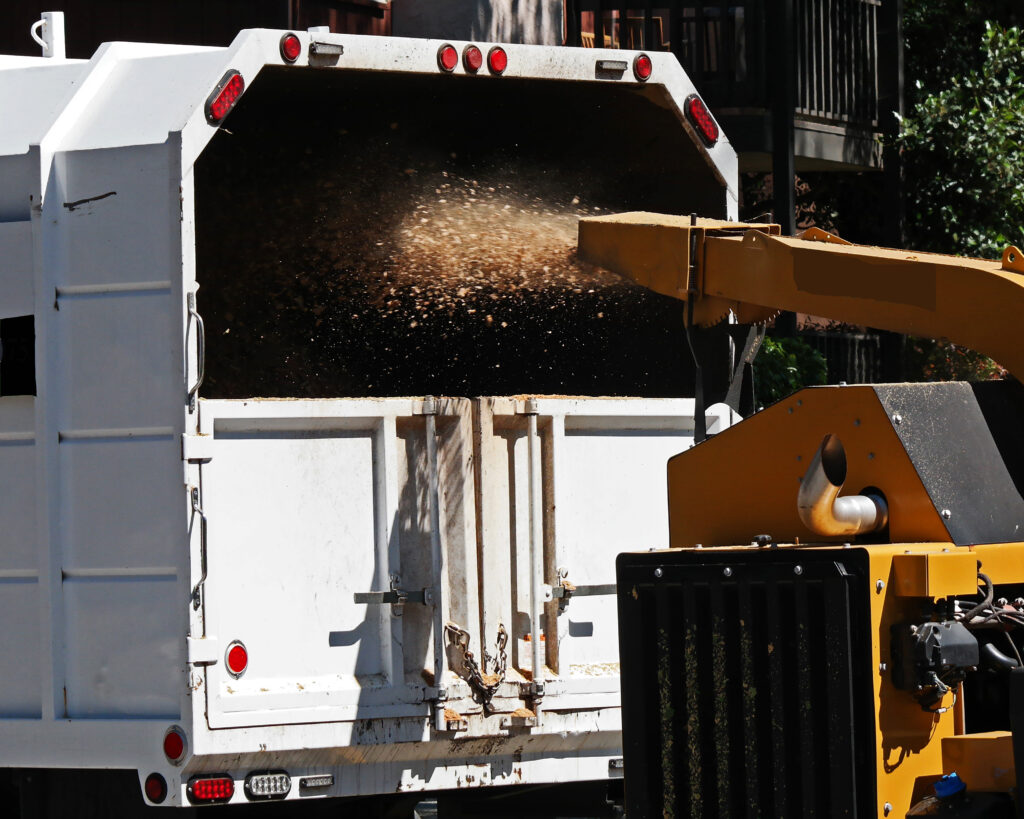
Before the crew arrives, we confirm access, what needs protecting, and what will happen to the wood, chips, and stump. A mature tree can create a surprising amount of material, so we make those decisions up front and look for practical ways to reuse or recycle it whenever possible.
Haul Away & Reuse We remove branches, chips, and wood as agreed, with reuse and recycling in mind whenever practical instead of treating everything as waste.
Keep Some or Keep It All Firewood-length rounds, larger logs, or usable wood can be left onsite when you want it for firewood, milling, landscaping, or another use.
Leave Chips for Mulch Fresh chips can be left onsite for garden beds, paths, or other landscape use when there’s a good place for them.
Finish Below Grade Grind the stump below grade so the area is easier to replant, regrade, or put back into use after the tree is gone.
01
We look at the tree's condition, access, what's around it, and the safest way to take it down.
02
Crew size, rigging, equipment, protection, and disposal are worked out before the crew arrives.
03
The crew brings it down according to the plan, by rope, in sections, or with crane support depending on the site.
04
Debris is processed, the agreed wood and chip plan is carried out, and the property is left clean and usable.
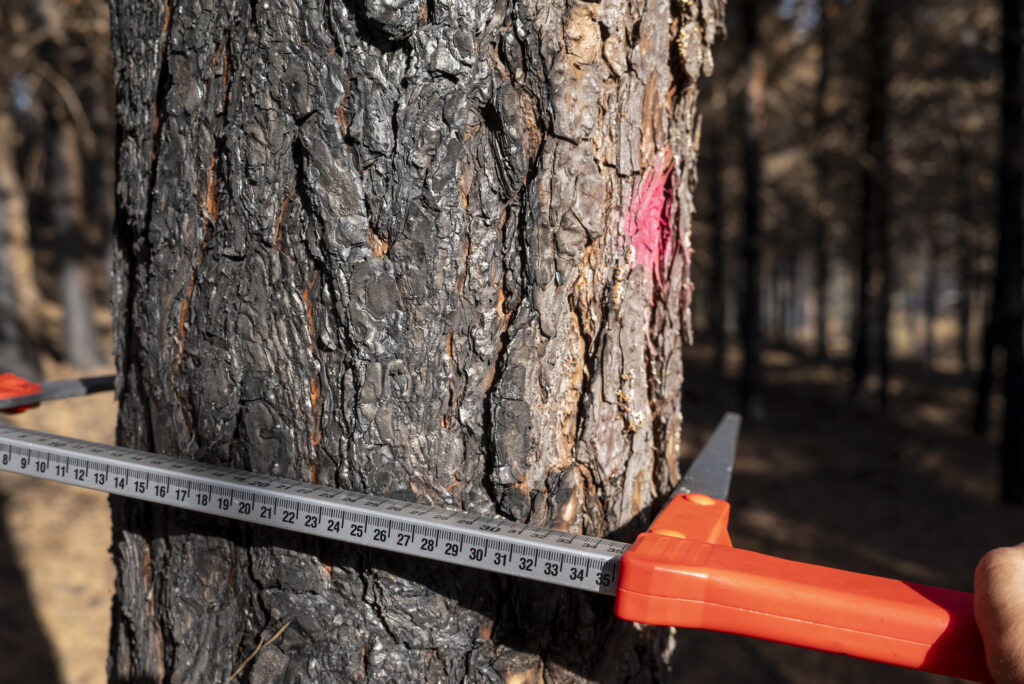
Tree removal rules vary by city, tree size, species, and property conditions. In some cases, critical areas, steep slopes, or protected-tree requirements can also affect what’s allowed. We flag those issues before the work is scheduled and help identify what may be required so there are no surprises later.
Tree removal is one of the least reversible things we do on a property, so it gets careful planning from the start. We match the crew, rigging, equipment, and removal method to the tree and the site instead of forcing every job into the same approach.
ISA Certified Arborists
Experienced Climbing & Rigging Crews
Licensed, Bonded & Insured
Property Protection Planning
Thorough Site Cleanup
Locally Owned Since 2001